Blog
Ball Bearings vs Roller Bearings: Differences, Advantages, and Applications

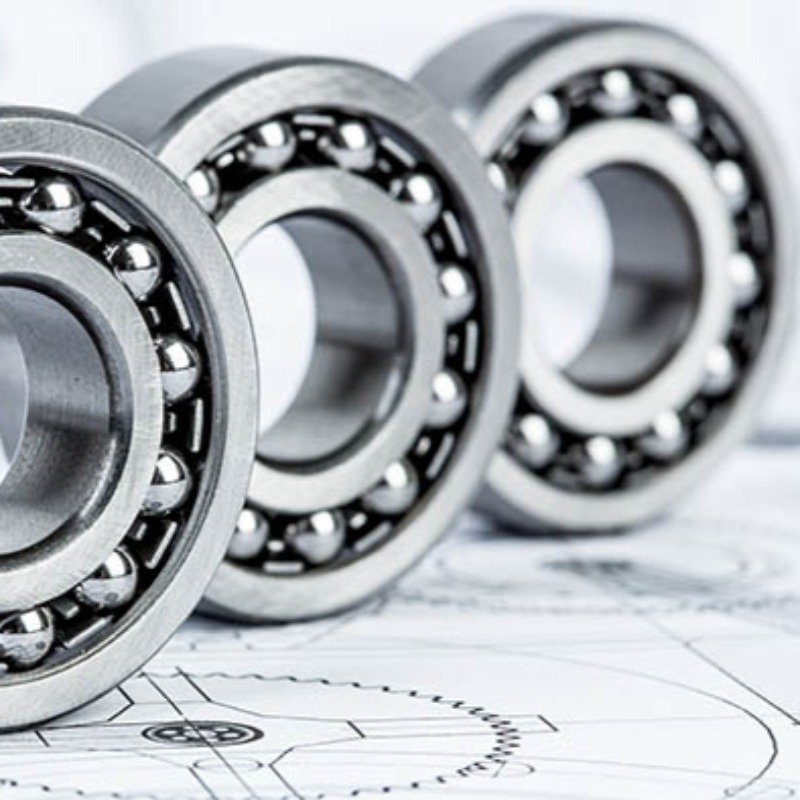
In almost every machine that moves, rotates, or carries a load, there is a small but critical component working quietly behind the scenes: the bearing. Bearings reduce friction, support loads, and allow mechanical parts to move smoothly and efficiently. Without them, industrial machines, vehicles, pumps, motors, and countless other systems would wear out quickly or fail entirely.
Among the many bearing designs used in modern engineering, ball bearings and roller bearings are two of the most widely used. At first glance they may appear similar, but their internal structure, load capacity, and performance characteristics can be very different. Choosing the wrong type can lead to premature wear, overheating, vibration, or even equipment failure.
Understanding the difference between these two bearing families is essential not only for engineers but also for technicians, maintenance teams, and purchasing managers who work with industrial equipment.
If you are evaluating bearings for a new machine, replacing worn components, or simply trying to understand how these critical parts work, knowing when to use ball bearings or roller bearings can make a significant difference in performance, reliability, and cost.
If you are currently sourcing high‑quality bearings for industrial applications, you can also explore the wide range of solutions available at Alma Bearings to compare reliable products used in various mechanical systems.

Understanding the Basic Role of Bearings
Before comparing ball bearings and roller bearings, it helps to understand the fundamental role bearings play in mechanical systems.
Whenever two surfaces move against each other, friction occurs. Excessive friction creates heat, increases wear, and wastes energy. Bearings solve this problem by introducing a rolling or sliding interface between moving parts.
In most rotating equipment, a shaft must rotate inside a housing while carrying radial loads, axial loads, or a combination of both. Bearings support this rotating shaft and allow it to move with minimal resistance.
The efficiency of this motion depends on several factors, including:
- The shape of the rolling elements
- Load distribution
- lubrication conditions
- operating speed
- environmental factors such as dust, moisture, or temperature
Ball bearings and roller bearings approach this challenge in slightly different ways, and those differences are what determine their ideal applications.
What Are Ball Bearings?
Ball bearings are one of the most recognizable types of bearings used in mechanical systems. Their design uses spherical balls placed between two rings known as races. These balls roll smoothly between the inner and outer raceways, reducing friction as the shaft rotates.
Because the rolling elements are perfectly round, contact between the ball and the raceway occurs at a single point. This point contact significantly reduces friction, allowing ball bearings to operate at high speeds.
Ball bearings are widely used in applications where smooth motion and high rotational speed are required. You can find them in electric motors, fans, household appliances, automotive components, and precision equipment.
One of the key advantages of ball bearings is their ability to handle both radial loads and moderate axial loads simultaneously. This versatility makes them a popular choice in many industries.
However, because the load is concentrated on small contact points, ball bearings generally have a lower load capacity compared with roller bearings.
What Are Roller Bearings?
Roller bearings operate on the same basic principle as ball bearings, but the rolling elements are cylindrical or tapered instead of spherical.
Instead of point contact, roller bearings create line contact between the rolling element and the raceway. This means the load is distributed across a larger surface area.
Because the load spreads along a line rather than a single point, roller bearings can support much heavier loads than ball bearings.
Roller bearings are commonly used in heavy machinery, gearboxes, mining equipment, construction machines, and industrial conveyors where durability and load capacity are critical.
Different roller geometries allow these bearings to support specific types of loads more effectively. For example, cylindrical rollers are excellent for radial loads, while tapered rollers can handle both radial and axial forces.
Due to their robust design, roller bearings are typically chosen for applications where strength and durability are more important than extremely high speeds.
Key Structural Differences Between Ball and Roller Bearings
The most obvious difference between these bearings is the shape of the rolling elements.
Ball bearings use spherical balls that touch the raceways at a single point. Roller bearings use cylindrical or tapered rollers that contact the raceways along a line.
This structural difference may seem minor, but it has a significant impact on performance.
Because ball bearings have minimal contact area, they produce very low friction. This makes them ideal for applications where components rotate at high speeds and energy efficiency is important.
Roller bearings, on the other hand, distribute loads over a larger surface area. This improves load capacity and durability but usually results in slightly higher friction compared with ball bearings.
Another difference is how each bearing handles shock loads. Roller bearings generally tolerate heavy or sudden loads better than ball bearings because of their stronger contact surface.

Load Capacity Comparison
Load capacity is often the deciding factor when engineers choose between ball bearings and roller bearings.
Ball bearings perform best in applications where loads are relatively light to moderate. Because the load is concentrated at small contact points, excessive force can cause deformation or premature wear.
Roller bearings excel in high‑load environments. The line contact between rollers and raceways distributes stress across a larger area, making them more suitable for heavy industrial applications.
For example, equipment such as conveyor systems, crushers, and heavy gearboxes typically rely on roller bearings because they must support significant radial loads over long operating periods.
However, this does not mean ball bearings are weak. In many machines where speed, precision, and efficiency matter more than raw load capacity, ball bearings remain the preferred solution.
Speed Capabilities
Another important difference between these bearing types is their ability to operate at high rotational speeds.
Ball bearings generally outperform roller bearings in high‑speed environments. Their point contact reduces friction, heat generation, and energy loss.
This is why ball bearings are widely used in:
- Electric motors
- Machine tools
- Cooling fans
- Medical equipment
- Precision instruments
Roller bearings, while extremely strong, typically operate at lower speeds due to increased friction and contact surface.
In heavy equipment, speed is often less important than load capacity and durability, which is why roller bearings dominate those applications.
Durability and Service Life
Both ball and roller bearings can achieve long service life when properly selected and maintained. However, their durability depends heavily on operating conditions.
Ball bearings tend to perform best in clean environments with consistent loads and proper lubrication. When subjected to heavy shock loads or misalignment, they may wear faster.
Roller bearings are usually better suited for demanding industrial environments where machines operate under heavy loads, vibration, or fluctuating forces.
Because roller bearings distribute loads more evenly, they are often more resistant to fatigue in high‑load applications.
That said, improper lubrication, contamination, and incorrect installation can damage either type of bearing regardless of design.
If you are evaluating which bearing type is suitable for your machinery, consulting experienced suppliers can save time and prevent costly mistakes. Alma Bearings provides access to a wide range of industrial bearing solutions used in manufacturing, heavy equipment, and precision machinery worldwide.
Common Industrial Applications
Both ball bearings and roller bearings appear in thousands of machines across modern industry. Their selection often depends on the balance between speed, load, and environmental conditions.
Ball bearings are commonly found in applications that prioritize efficiency and smooth motion. These include electric motors, HVAC systems, pumps, small gearboxes, and consumer equipment.
Roller bearings dominate heavy industrial sectors where machines must withstand extreme forces and continuous operation. Mining equipment, construction machinery, steel mills, and large conveyor systems frequently rely on roller bearings.
In many industrial machines, different bearing types may even be used together. For example, a machine may use ball bearings to support high‑speed shafts while roller bearings handle heavier loads elsewhere in the system.
This combination approach allows engineers to optimize both performance and durability.

Lubrication Considerations
Lubrication plays a crucial role in the performance of any bearing system. Whether using ball bearings or roller bearings, proper lubrication reduces friction, prevents overheating, and protects surfaces from wear.
Ball bearings often operate efficiently with grease lubrication because of their lower friction characteristics.
Roller bearings, especially those used in heavy industrial equipment, may require oil lubrication to maintain proper film thickness and cooling.
Selecting the correct lubricant depends on several factors, including operating speed, temperature, load conditions, and environmental exposure.
Poor lubrication remains one of the most common causes of premature bearing failure in both bearing types.
Cost Considerations
Cost is another factor organizations consider when choosing between ball and roller bearings.
Ball bearings are often more economical in smaller sizes and lighter applications due to their simpler load requirements.
Roller bearings may cost more initially, but they often provide better long‑term value in heavy machinery because they can withstand greater loads and reduce the risk of equipment failure.
The true cost of a bearing should never be measured by price alone. Downtime, maintenance expenses, and machine reliability must also be considered.
Investing in high‑quality bearings from reputable suppliers typically results in longer service life and lower overall operating costs.
Which Bearing Type Should You Choose?
The decision between ball bearings and roller bearings ultimately depends on the specific requirements of your application.
If your machinery operates at high speeds with moderate loads, ball bearings are often the ideal choice.
If your equipment must support heavy loads or endure harsh industrial conditions, roller bearings usually provide better durability.
Engineers often evaluate factors such as load direction, rotational speed, shaft size, operating temperature, and maintenance requirements before selecting a bearing.
Because each application is unique, consulting with knowledgeable suppliers or engineers can help ensure the right bearing is selected from the beginning.
Conclusion
Ball bearings and roller bearings are two of the most important components used in modern mechanical systems. Although they share the same basic goal—reducing friction and supporting rotating shafts—their design differences create unique strengths.
Ball bearings excel in high‑speed, low‑friction environments where efficiency and precision matter. Roller bearings provide superior load capacity and durability for heavy industrial equipment.
Understanding these differences allows engineers, technicians, and purchasing specialists to make better decisions when selecting bearings for machinery.
Choosing the correct bearing not only improves performance but also extends equipment lifespan and reduces maintenance costs.
If you are looking for reliable industrial bearings for your machinery or need assistance selecting the right solution, Alma Bearings offers a wide range of products suitable for various applications. Exploring professional suppliers can help ensure you get durable, high‑quality bearings designed for long‑term performance.
products: Deep groove ball bearings
FAQ
- What is the main difference between ball bearings and roller bearings?
Ball bearings use spherical balls that create point contact with the raceway, allowing higher speeds and lower friction. Roller bearings use cylindrical or tapered rollers that create line contact, enabling them to carry heavier loads.
- Which bearing type can handle heavier loads?
Roller bearings generally support heavier loads because the load is distributed across a larger contact area compared with ball bearings.
- Are ball bearings better for high‑speed applications?
Yes. Ball bearings produce less friction and heat, which makes them more suitable for high‑speed machinery such as electric motors and fans.
- Where are roller bearings commonly used?
Roller bearings are widely used in heavy industrial equipment such as gearboxes, conveyors, construction machines, and mining equipment.
- Can ball bearings handle axial loads?
Many ball bearings can support both radial and moderate axial loads, which makes them versatile for many mechanical systems.
- Which bearing type lasts longer?
Service life depends on load, lubrication, and operating conditions. Roller bearings often last longer in heavy‑load applications, while ball bearings perform well in high‑speed environments.