
Blog
Precision Starts with the Right Laboratory Equipment

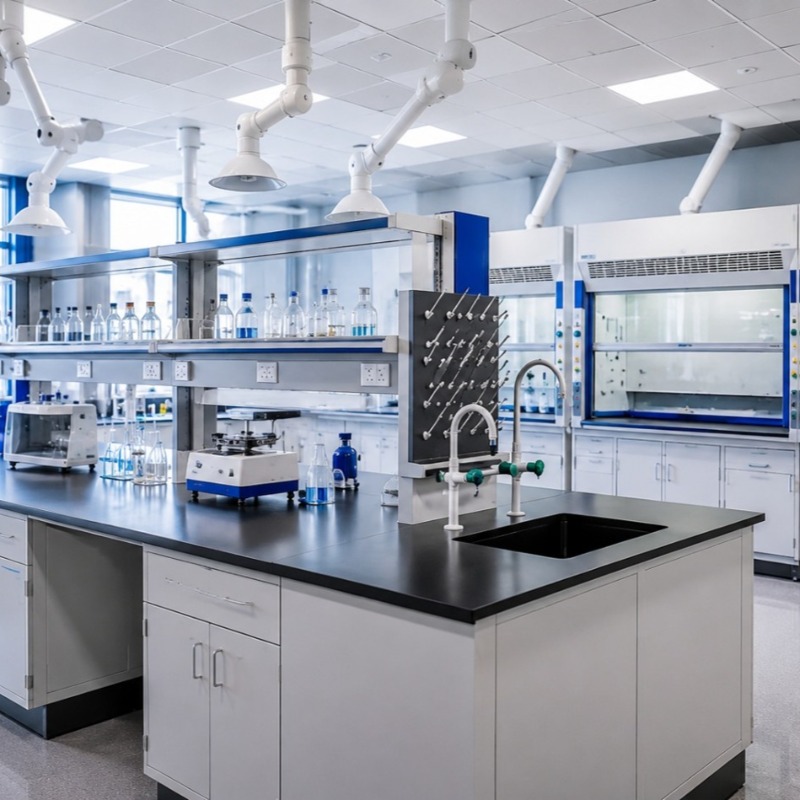
Scientific progress is often associated with groundbreaking discoveries, innovative technologies, and brilliant researchers. Yet behind every successful experiment lies a less celebrated but equally important factor: the quality of the laboratory equipment used throughout the research process. From universities and research institutes to pharmaceutical companies and industrial laboratories, precision begins with choosing reliable equipment that delivers consistent performance.
As laboratories continue to adopt more sophisticated analytical techniques, selecting a trusted supplier becomes just as important as selecting the instruments themselves. Companies such as RoyanIran have contributed to this growing demand by providing laboratory equipment and laboratory infrastructure solutions that support research, education, industrial testing, and quality control across a wide range of scientific disciplines.

Precision Is Never an Accident
Accuracy is the foundation of scientific research. Whether a laboratory is performing chemical synthesis, microbiological analysis, material characterization, or environmental testing, even the smallest measurement error can influence the outcome of an experiment.
While advanced analytical instruments often receive the most attention, the supporting laboratory environment plays an equally significant role. Laboratory furniture, fume hoods, sinks, gas fixtures, and cleaning equipment all contribute to creating a workspace where experiments can be performed safely and consistently.
Poor-quality equipment may introduce contamination, reduce operational efficiency, or increase maintenance costs. Over time, these seemingly minor issues can affect research productivity and compromise the reliability of experimental results.
For this reason, modern laboratories increasingly view laboratory equipment as a long-term investment rather than a short-term purchase.
Building Laboratories That Support Scientific Excellence
Today’s laboratories are expected to meet much higher standards than they did a decade ago. Researchers demand greater precision, stricter safety requirements, improved ergonomics, and equipment capable of supporting increasingly complex workflows.
A well-designed laboratory combines functionality with durability. Every component should contribute to a safer and more efficient working environment.
For example, laboratory furniture must withstand exposure to chemicals while maintaining structural stability. Fume hoods should effectively remove hazardous vapors without disrupting laboratory operations. Laboratory sinks need to resist corrosive substances, and gas and water fixtures must operate reliably under continuous use.
These elements may seem ordinary individually, but together they form the infrastructure that allows sophisticated research to take place.
The Hidden Cost of Low-Quality Laboratory Equipment
Budget limitations often encourage organizations to prioritize lower purchase prices. However, the initial cost of equipment rarely reflects its true long-term value.
Low-quality laboratory equipment frequently leads to:
Increased maintenance requirements
Unexpected equipment downtime
Reduced measurement consistency
Higher replacement costs
Safety concerns for laboratory personnel
Lower operational efficiency
In research environments where experiments may continue for weeks or months, interruptions caused by equipment failures can be significantly more expensive than investing in higher-quality solutions from the beginning.
This is particularly important for laboratories working under strict quality standards or regulatory frameworks where consistency and traceability are essential.
Safety Is Part of Laboratory Performance
Laboratory safety extends far beyond protective clothing and standard operating procedures. The equipment itself directly influences the safety of researchers and technicians.
Proper ventilation systems reduce exposure to hazardous chemicals. Chemical-resistant laboratory furniture minimizes structural degradation over time. Reliable gas fixtures help prevent accidental leaks, while durable sinks and drainage systems reduce the risk of chemical damage.
As laboratories become more specialized, integrating safety into laboratory design has become an essential aspect of operational planning rather than an optional feature.
Organizations that invest in high-quality laboratory infrastructure often experience fewer workplace incidents while improving overall productivity.
Choosing the Right Laboratory Equipment Supplier
Selecting laboratory equipment involves more than comparing product specifications or prices. A reliable supplier should be capable of supporting laboratories throughout the entire lifecycle of their equipment.

Several factors deserve careful consideration:
Product Quality
Equipment should be manufactured using materials suitable for demanding laboratory environments, including resistance to chemicals, moisture, heat, and continuous use.
Technical Expertise
Experienced suppliers understand laboratory workflows and can recommend solutions tailored to specific research or industrial applications.
Customization
Every laboratory has unique requirements. The ability to customize laboratory furniture, ventilation systems, and utility fixtures often improves both efficiency and available workspace.
Compliance with Standards
Laboratory equipment should meet recognized quality and safety standards whenever applicable.
After-Sales Support
Installation assistance, maintenance services, technical consultation, and spare part availability all contribute to maximizing the lifespan of laboratory equipment.
Choosing a dependable laboratory equipment supplier is therefore not simply a procurement decision—it is an investment in long-term research performance.
Supporting Modern Laboratories Through Integrated Solutions
Modern laboratories increasingly prefer integrated solutions instead of purchasing individual products from multiple vendors. Coordinating furniture, ventilation systems, utility fixtures, and laboratory accessories through a single supplier often simplifies installation, improves compatibility, and reduces project complexity.
This integrated approach has become particularly valuable for new laboratory construction projects as well as laboratory renovation initiatives where efficiency, space utilization, and safety are equally important.
Suppliers capable of delivering comprehensive laboratory solutions can help organizations create environments that support both current research requirements and future expansion.
Innovation Requires Reliable Infrastructure
Innovation is often associated with advanced technologies such as automation, artificial intelligence, and digital laboratory management systems. However, these innovations still depend on reliable physical infrastructure.
Even the most sophisticated analytical instrument cannot achieve optimal performance within an inadequately designed laboratory.
Stable work surfaces, reliable ventilation, chemical-resistant materials, effective cleaning systems, and properly engineered utility connections collectively create the conditions necessary for advanced scientific research.
As research becomes increasingly interdisciplinary, laboratories must remain flexible enough to accommodate changing technologies while maintaining consistent operational standards.
Investing in Long-Term Scientific Success
Laboratory equipment should never be viewed as a routine purchase. It represents a strategic investment in research quality, operational efficiency, workplace safety, and long-term sustainability.
Organizations that prioritize quality during laboratory planning often experience lower operating costs, improved productivity, and greater confidence in their research outcomes over time.
Whether establishing a new research facility or upgrading an existing laboratory, partnering with experienced suppliers can significantly improve project success. Companies such as RoyanIran continue to support laboratories by offering reliable laboratory equipment and infrastructure solutions designed to meet the evolving needs of research institutions, universities, industrial laboratories, healthcare facilities, and quality control centers.
Ultimately, scientific precision begins long before data analysis or publication. It begins with the environment in which research takes place—and that environment is built on dependable laboratory equipment selected with quality, safety, and long-term performance in mind.