Blog
Rail Freight via Iran: Fast Transit Routes to China, Russia, India and Turkmenistan

Iran has increasingly become one of the most strategic land bridges for regional and intercontinental cargo movement. For shippers, traders, and logistics companies looking for a faster and more cost-effective alternative to long maritime routes, rail transit via Iran is now attracting serious attention. Its geographic position between Central Asia, the Persian Gulf, South Asia, and Russia makes the country a natural hub for cross-border cargo flows.
Today, many businesses are actively evaluating rail freight via Iran as a practical solution for moving goods between Asia, the CIS region, Russia, and southern ports. As demand for reliable overland logistics grows, international rail freight Iran is no longer viewed as a niche option, but as a competitive route for companies seeking better transit times, multimodal flexibility, and access to key regional markets.
One of the strongest advantages of the Iranian network is the growing range of Iran rail transit services available to importers, exporters, and freight operators. From border handling and customs coordination to wagon allocation and route planning, the market for Iran rail freight forwarding is becoming increasingly relevant for companies that need dependable transit support across multiple corridors. Choosing the right Iran rail transit company can significantly reduce operational complexity and help cargo owners secure smoother movement across borders.
In parallel, cost transparency is becoming a major concern for international customers. Many shippers compare Iran rail transit rates with sea and road alternatives before deciding on the most efficient routing option. Understanding the structure of the Iran rail transit tariff system is therefore essential for businesses that want to optimize supply chain costs while maintaining predictable delivery schedules.
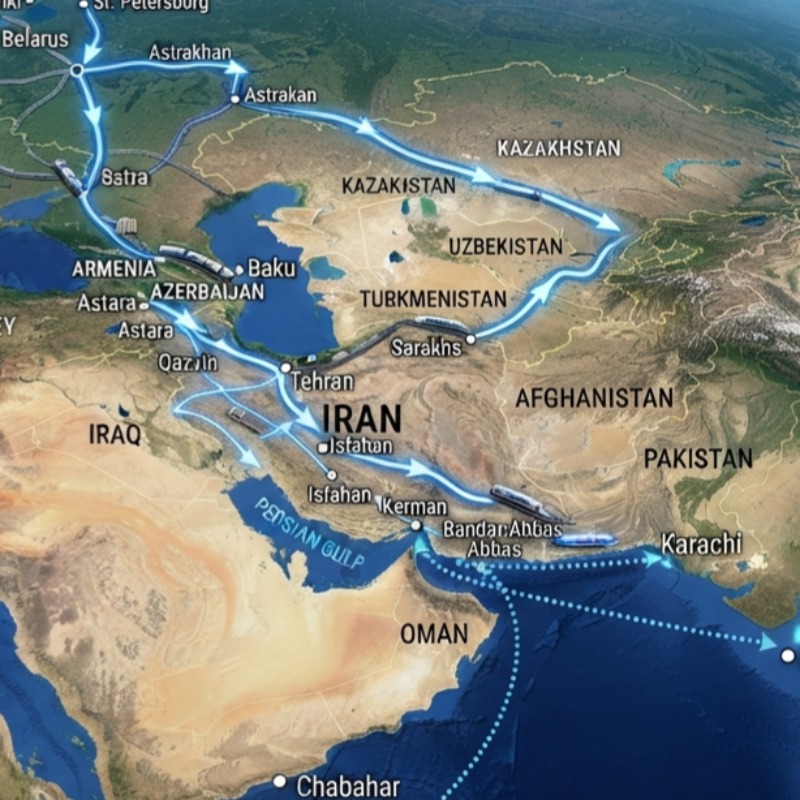
A major reason behind this growing interest is the importance of the North-South Transport Corridor (NSTC), which has positioned Iran as a critical transit country between Russia, Central Asia, the Caucasus, the Persian Gulf, and India. In particular, the INSTC rail route is receiving more attention from logistics planners who want to reduce dependency on traditional shipping routes and gain access to a faster and more resilient freight network.
As global trade patterns continue to shift, Iran’s role in regional rail connectivity is becoming more visible. Companies searching for secure, scalable, and commercially viable transport solutions are increasingly considering Iranian rail corridors as part of their long-term logistics strategy.
Rail Freight China to Iran
The demand for rail freight China to Iran has seen a significant surge as businesses seek a middle ground between slow maritime transport and expensive air freight. This rail link, often part of the “New Silk Road,” typically enters Iran through the Sarakhs or Incheh-Borun border crossings after traversing Kazakhstan and Turkmenistan.
For logistics managers, the primary value proposition is time efficiency. While sea freight from Chinese ports like Shanghai or Ningbo to Bandar Abbas can take 30 to 35 days, the rail route cuts this duration down to approximately 14–18 days. This drastic reduction in lead time allows companies to optimize inventory turnover and respond faster to market demands.
Rail transport also offers a more stable pricing environment compared to the volatile container rates of the shipping industry. From electronics and machinery to industrial raw materials, rail freight China to Iran provides a secure, containerized solution that minimizes the risks of damage or delay associated with transshipment at busy maritime hubs.
Rail Freight Russia to India via Iran
The International North-South Transport Corridor (INSTC) has revolutionized the way cargo moves between the Eurasian heartland and the Indian subcontinent, making rail freight Russia to India via Iran a cornerstone of modern regional trade. This multimodal route connects major Russian industrial centers such as Moscow and Saint Petersburg to the Persian Gulf through the Iranian rail network.
Shippers looking for a resilient alternative to the Suez Canal find this route particularly attractive, as it offers a significant reduction in both distance and cost. Cargo typically travels by rail to Iranian northern ports (such as Anzali or Amirabad) or through all-rail eastern routes via Sarakhs, before moving down to the strategic port of Bandar Abbas and onward by sea to Mumbai or Mundra.
By choosing rail freight Russia to India via Iran, companies can achieve up to a 40% reduction in transit time compared to traditional sea routes. This corridor is essential for transporting fertilizers, timber, coal, and chemicals from Russia, offering a geopolitically resilient and secure path that bypasses traditional maritime chokepoints.
Rail Freight India to Turkmenistan via Iran
For Indian exporters aiming to enter the growing markets of Central Asia, rail freight India to Turkmenistan via Iran offers the most direct and efficient logistics gateway. Since India lacks a direct land connection to Central Asia, the Iranian port of Bandar Abbas serves as the vital entry point.
Cargo arriving at Bandar Abbas is transshipped onto the Iranian railway network and moved northward toward the Sarakhs or Incheh-Borun border crossings. This route is particularly important for the movement of pharmaceuticals, textiles, tea, and engineering goods.
Using the rail freight India to Turkmenistan via Iran route ensures that goods reach Ashgabat and other Turkmen commercial hubs in a fraction of the time required by traditional shipping paths. The synergy between Indian maritime logistics and Iranian rail infrastructure provides a seamless port-to-rail transition, enabling large-scale movement of bulk and containerized cargo with simplified customs procedures under international transit conventions — strengthening trade ties between India and the landlocked CIS countries.
Rail Freight to Turkmenistan via Iran
As a central hub in the regional logistics network, Iran provides a diverse range of options for international shippers seeking rail freight to Turkmenistan via Iran. This route forms a critical segment of the KITI (Kyrgyzstan–Tajikistan–Afghanistan–Iran) corridor and other regional networks, serving as a primary transit artery for European, Turkish, and Persian Gulf countries seeking access to the Turkmen market.
The Iranian railway system offers specialized wagon types — including covered wagons for perishable goods, flatcars for containers, and high-sided wagons for minerals — to accommodate the diverse cargo needs of rail freight to Turkmenistan via Iran.
The main advantage of using the Iranian rail corridor is the reliability of its infrastructure combined with competitive transit tariffs compared to road transport. Through the Sarakhs and Incheh-Borun border gates, Iran continues to strengthen its position as a preferred choice for bulk commodities and heavy machinery destined for infrastructure projects across Turkmenistan and beyond.
Why Choose Iran Rail Transit for Your Supply Chain
With growing global demand for faster, more cost-efficient, and geopolitically stable trade routes, Iran rail transit offers a compelling solution for businesses connecting Asia, Russia, the CIS region, and South Asia. Whether you’re evaluating Iran rail transit rates, comparing tariff structures, or searching for a reliable Iran rail transit company to handle end-to-end forwarding, Iran’s expanding rail network — anchored by the INSTC rail route and the broader North-South Transport Corridor — is positioned to become one of the most important overland freight solutions of the coming decade.